Customer Guide
Growing Irises
“The quintessential spring flower, the iris brightens the garden with its wide variety of colours and delicate forms.”
Garden Irises
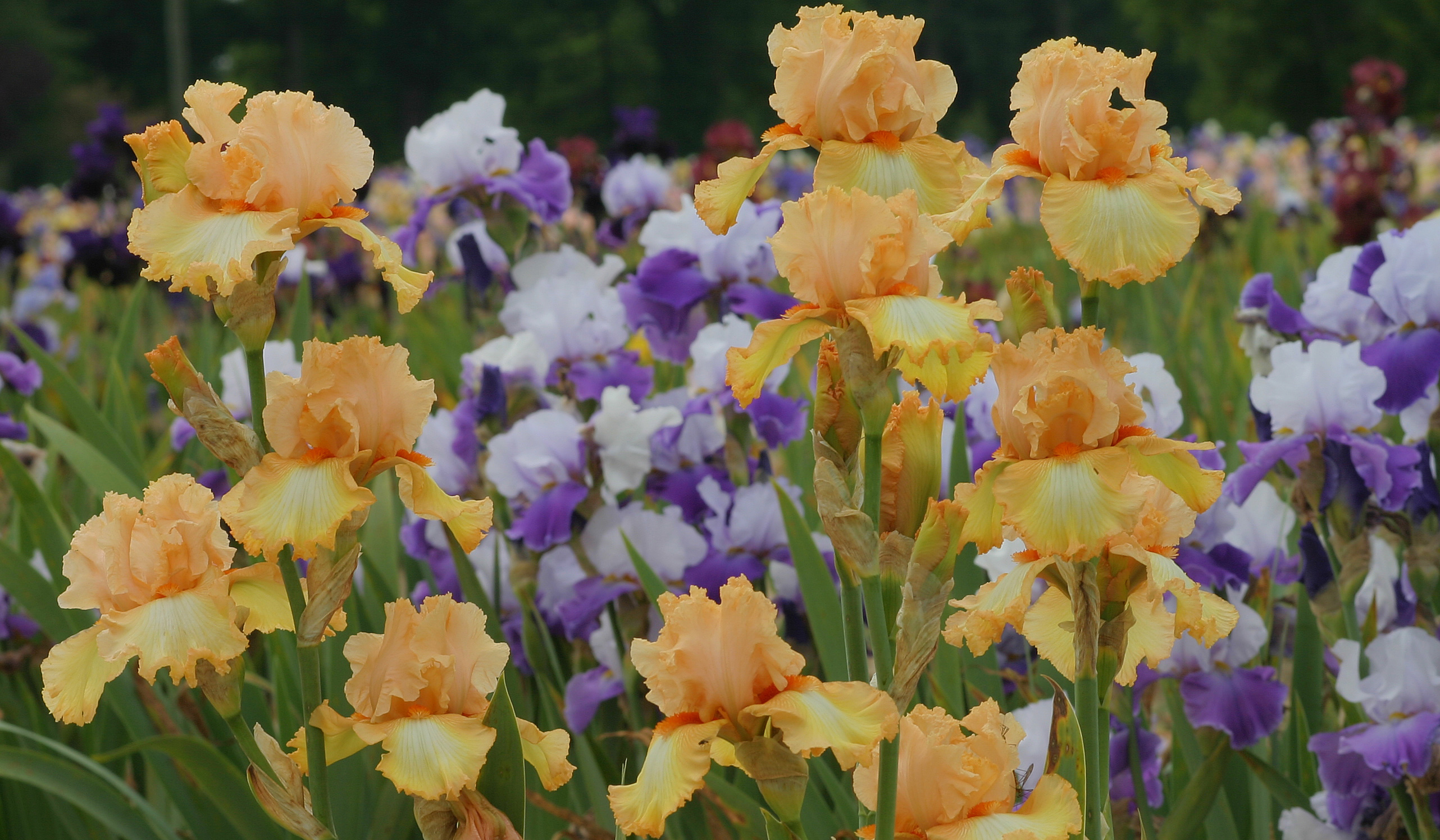
Garden irises are essential garden plants.
Extremely hardy, easy to grow and generous in bloom, they offer an incomparable display of colours, shapes and textures in spring.
They fit naturally: at the foot of a wall; along a path; in a rock garden; or in a flower bed.
The Main Iris Families
Garden Irises
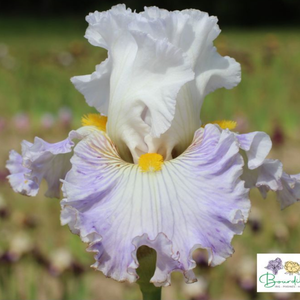
Bearded irises, also known as garden irises, are the best-known and most widely grown varieties.
Irises for Wet Areas and Other Specific Varieties
Siberian Irises
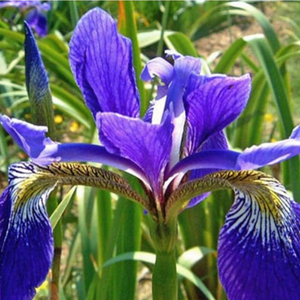
Iris sibirica have delicate, slender flowers that are particularly elegant in bouquets. They thrive beside ponds and other bodies of water, in full sun.
These very hardy plants prefer cool, deep and slightly acidic soil. Watering is essential during dry summers.
Avoid transplanting them too frequently and feed them regularly, as they prefer rich soil. Space plants approximately 70 cm apart and bury the crown 5 cm deep.
Spuria Irises
These extremely elegant irises grow from 1 to more than 1.20 metres tall. They have magnificent, broad and abundant foliage.
Their flower shape is reminiscent of an orchid. Colours range from white and yellow to blue, burgundy and brown, with a bright yellow signal. They are also worth trying as cut flowers. Blooming in June, they extend the iris flowering season after the garden irises.
Their planting and maintenance requirements are the same as those of garden irises.
Ensata Irises
These Japanese irises require fairly acidic, rich soil. Watering during spring and summer is recommended to support their growth and produce beautiful flowers.
Plant them in a sunny position. These easy-to-grow irises will flourish and form attractive clumps. They produce some of the most spectacular flowers of all irises: enormous, flat and undulating blooms, some marbled with grey or white.
Like garden irises, they should be divided after four years. They flower after garden irises.
Pseudacorus Irises
These extremely hardy marsh irises can be grown either submerged in a pond or in consistently moist soil.
They have large, broad leaves, grow from 1 to 1.50 metres tall and should be divided at the end of summer.
Versicolor and Virginica Irises
These irises naturally grow in marshes and along riverbanks. They reach between 60 and 90 cm in height and have very long, narrow, rigid, lance-shaped leaves.
Their flowers are very large, and flowering begins in late spring.
They are propagated by division after flowering.
Advice for Growing Healthy Irises
Planting
The best time to plant irises is between July and October, avoiding periods of extreme heat or frost.
Ideal conditions:
full sun;
dry, well-drained soil;
no excess water, which could cause the rhizome to rot.
The rhizome should remain level with the soil surface. Rhizomes are underground stems, not true roots.
Recommended spacing: 30 to 40 cm.
Maintenance
Irises require little maintenance:
- lightly hoe the soil to remove weeds;
- remove faded flowers to prevent the rhizome from becoming depleted;
- do not cut back the foliage, as it is essential for growth.
Fertilising:
use an organic fertiliser low in nitrogen;
apply it in March and again after flowering in July.
Watering: required at planting. Reblooming irises should also be watered during dry periods.
Division
After four years, if flowering begins to decline, it is time to divide the plants.
Method:
- lift the clump;
- separate the rhizomes;
- keep the strongest rhizomes for replanting.
This process allows you to preserve your irises for many years.
Diseases
Diseases are rare, but two are encountered most frequently:
Iris leaf spot
Spots appear on the foliage.
Cut off and burn affected leaves.
A copper-based fungicide may be used as a preventive treatment.
Rhizome rot
Soft, unpleasant-smelling areas caused by excess moisture.
Improve drainage or plant on a raised mound.
Remove all infected areas.
Awards
Irises may receive prestigious awards, including:
- Dykes Memorial Medal (DM): the highest distinction across all iris categories;
- John C. Wister Medal (WM): awarded to tall bearded irises (TB);
- Caparne-Welch Medal (CWM): awarded to miniature dwarf bearded irises (MDB);
- Cook-Douglas Medal (CDM): awarded to standard dwarf bearded irises (SDB);
- Hanson Jacob Sass Medal (SM): awarded to intermediate bearded irises (IB);
- Williamson-White Medal: awarded to miniature tall bearded irises (MTB);
- Knowlton Medal (KM): awarded to border bearded irises (BB);
- Morgan-Wood Medal (MWM): awarded to Siberian irises (SIB).
In addition to these distinctions, the following awards are presented within each category:
- Honorable Mention (HM): awarded after an iris’s second year of registration;
- Award of Merit (AM): awarded to irises that received an Honorable Mention two years earlier.
A summary table showing the different flowering periods is available in the following section: